Ready for Kauai’s Rainy Season? How to Prepare Your Vehicle for Wet Roads in Lihue
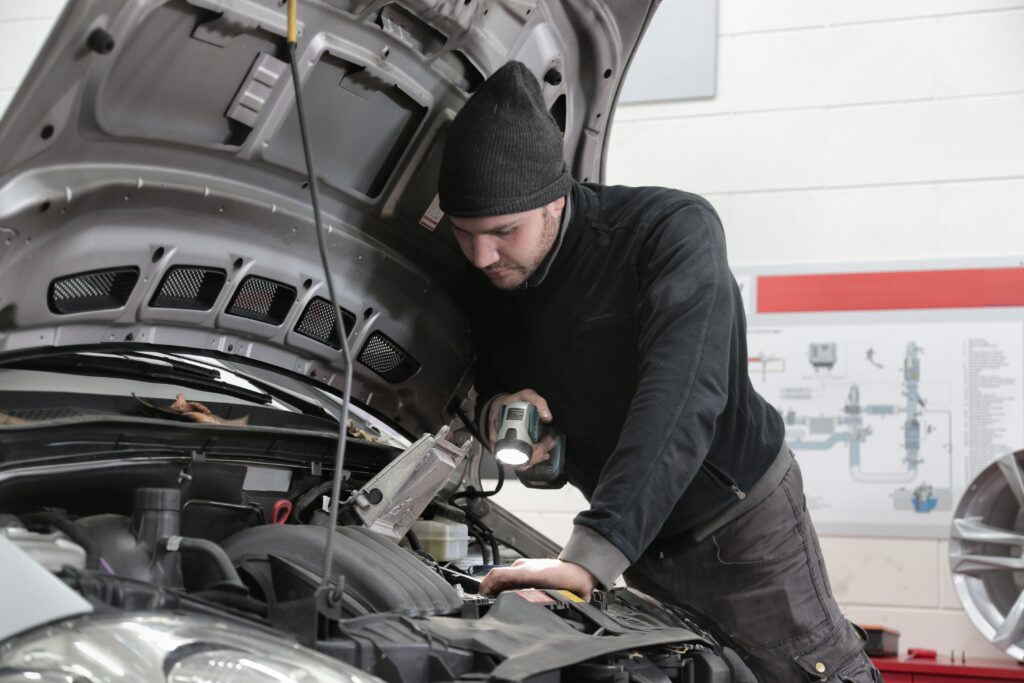
October brings a noticeable shift in driving conditions across Kauai. Rainfall becomes more frequent, heavy showers can arrive quickly, and hurricane season remains an important consideration. For drivers in Lihue, that means your vehicle needs to be ready for slick pavement, reduced visibility, standing water, and longer stopping distances. The good news is that wet-weather preparation does not have to be complicated. A few checks before the season intensifies can improve visibility, traction, and braking performance when you need them most. Why October Changes Driving Conditions October is a transition month. Weather patterns become more unsettled, and rain can be heavier or more persistent than the brief showers drivers may experience during drier months. The National Weather Service notes that fall can bring stronger showers, thunderstorms, and an increased risk of flash flooding in Hawaii. Rain also changes the way your vehicle responds. Water on the road reduces tire grip, makes braking less predictable, and can cover potholes or other hazards. Dark clouds and earlier sunset times reduce available daylight, while spray from other vehicles can make it harder to see lane markings and traffic ahead. Before setting out, check current weather and road alerts through the Hawaii Department of Transportation’s weather-related traffic updates, especially when a tropical system or flash-flood warning is active. Start With Your Windshield and Wiper Blades Your windshield is your primary line of sight in heavy rain. If the glass is dirty or your wiper blades are worn, visibility can deteriorate quickly. Replace wiper blades that: Leave streaks or cloudy patches Skip across the glass Chatter or squeak during use Have cracked, split, or hardened rubber Fail to clear water across the entire windshield Clean the inside and outside of the windshield as well. A film on the inside can create glare when headlights shine through rain, while dirt on the outside can scatter light and make visibility worse. Also check your washer fluid and make sure the spray nozzles are not blocked. Never rely on rain alone to clean the windshield while driving. Check Tires Before Wet Weather Arrives Tires are the only part of your vehicle in contact with the road, so their condition matters even more when pavement is wet. Adequate tread helps channel water away from the tire surface. Worn tread increases the risk of hydroplaning, when a layer of water separates the tire from the road. Inspect all four tires for: Low or uneven tread Cracks, bulges, or visible damage Uneven wear across the tread Nails or other embedded objects Incorrect air pressure Check tire pressure when the tires are cold and follow the vehicle manufacturer’s recommended specification. Do not use the maximum pressure printed on the tire sidewall as a substitute for the vehicle’s recommended setting. If the steering wheel vibrates, the vehicle pulls, or the tires are wearing unevenly, schedule an inspection before wet-weather driving becomes more demanding. A general maintenance appointment at Destination Autoworks can help identify tire and suspension concerns before they affect traction. Worn Brakes Can Be More Noticeable on Wet Roads Rain does not make a healthy brake system unsafe by itself, but wet roads provide less tire grip. That means your vehicle may require more distance to stop, particularly if you are following too closely or traveling too fast for conditions. Worn brake components can make the situation worse. Pay attention to warning signs such as: Squealing, grinding, or scraping A brake pedal that feels soft or sinks unusually far Pulling to one side while braking Pulsation or vibration through the pedal or steering wheel A noticeable increase in stopping distance Do not wait for a serious noise before seeking help. Brake pads, rotors, calipers, and related components should work together smoothly and consistently. If you are searching for brake repair in Lihue, Destination Autoworks provides brake and suspension diagnostics and repairs for European, Asian, and domestic vehicles. While driving in the rain, reduce speed gradually and leave more space between your vehicle and the one ahead. Avoid sudden braking, acceleration, or steering whenever possible. Make Sure Every Light Is Working Rain and overcast conditions can make it difficult for other drivers to see your vehicle. Turn on your headlights during rain, even when it is daytime. If your vehicle has automatic lights or daytime running lights, confirm that your rear lights are also illuminated when needed. Check: Headlights Brake lights Tail lights Turn signals Hazard flashers Side marker lights A quick walk-around can reveal a burned-out bulb, cracked lens, or moisture inside a light housing. If a light is dim, flickering, or not working, have the electrical system checked rather than assuming the bulb is the only problem. Functional lights are especially important when rain, spray, and low light occur at the same time. Use the A/C to Defog the Windshield Many drivers think of the air conditioning system only as a way to cool the cabin. It also plays an important role in clearing fog from the windshield. When the glass begins to fog, use the defroster and turn on the A/C. The system helps remove moisture from the air moving across the windshield, allowing the glass to clear more effectively. Set the airflow toward the windshield and use fresh-air mode if needed. Avoid driving with partially fogged windows. Even a small amount of condensation can obscure pedestrians, lane markings, traffic signals, and vehicles approaching from the side. If the defroster is not clearing the glass properly or the A/C is not operating as expected, an A/C inspection can help identify the cause. For drivers looking for A/C repair in Lihue, Destination Autoworks offers A/C diagnostics and repairs. The goal here is not just comfort. It is maintaining a clear view while driving. Treat Puddles and Flooded Roads as Hazards A puddle may be shallow, or it may conceal a deeper section of flooded road. It can also hide debris, potholes, or damaged pavement. Avoid driving through flooded areas whenever possible. Rushing water can move a vehicle, and even standing
Failed Your State Safety Inspection in Lihue? Here’s What to Fix First
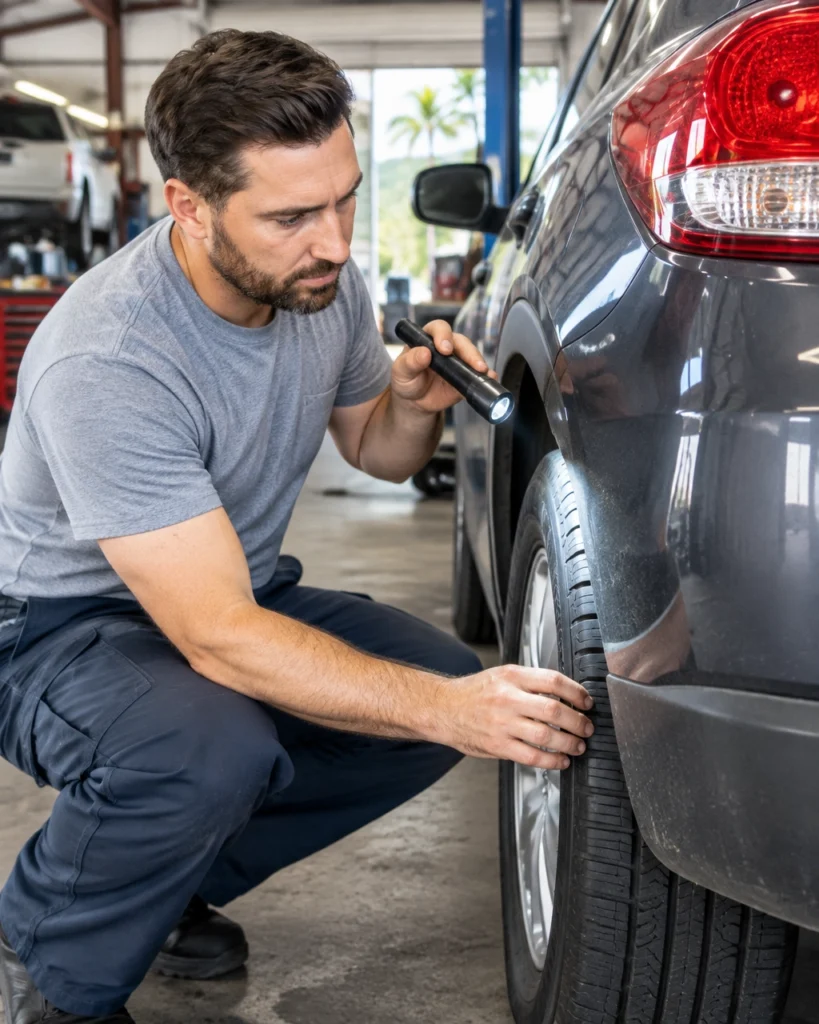
Failing a Hawaii safety inspection can be frustrating, especially when you need your vehicle for work, school, errands, or getting around Kauai. The good news is that a failed inspection does not always mean you need major repairs. In many cases, the problem comes down to one or two specific safety items that can be diagnosed and corrected quickly. The important part is knowing what to fix first and keeping the 30-day reinspection window in mind. If you are searching for a state safety inspection in Lihue, Destination Autoworks can help with both sides of the process. We provide certified state safety inspections and can diagnose or repair many of the issues that cause a vehicle to fail, including brake, lighting, tire, exhaust, steering, and suspension problems. Start With the Failed Inspection Slip Your failed inspection receipt should identify the reason or reasons your vehicle did not pass. Treat that document as your repair checklist. Do not rely only on the symptom you noticed. For example, a squeaking noise may point to a brake problem, but the inspection could also identify a worn hose, leaking component, parking brake issue, or warning light. Likewise, a tire that looks acceptable from the outside may have sidewall damage or insufficient tread in another area. Before authorizing repairs: Read every item listed on the failed inspection receipt. Ask the repair shop to inspect all listed systems. Request a clear explanation of what failed and why. Confirm whether any related safety items should be checked while the vehicle is already being serviced. Keep the receipt and repair records for reinspection. Hawaii and Kauai guidance generally gives you 30 days to correct the defects and return to the issuing inspection station for reinspection of the failed items without an additional inspection charge. The County of Kauai also notes that a failed inspection receipt is not valid as a substitute for a current safety inspection when driving on public roads. Review the County of Kauai safety check guidance for official requirements. What to Fix First: A Practical Priority Order Not every repair has the same safety impact, cost, or turnaround time. The right priority is to address anything that could make the vehicle unsafe to drive, then take care of quick inspection failures that can be repaired efficiently. 1. Brakes and Parking Brake Brakes should be your first priority if the inspection found a safety problem. A vehicle may fail because of worn brake pads or shoes, damaged rotors, leaking brake fluid, a soft or excessively low pedal, uneven braking, or a parking brake that does not hold securely. An illuminated brake or ABS warning light may also require diagnosis before the vehicle can pass. Avoid continuing to drive if the brake pedal feels soft, the vehicle pulls sharply during braking, or you hear grinding. These symptoms can indicate a problem that is more serious than ordinary pad wear. A brake inspection should evaluate the complete system, not just the visible friction material. That includes the pads or shoes, rotors or drums, calipers or wheel cylinders, hoses, lines, fluid condition, parking brake, and warning indicators. Destination Autoworks provides brake and suspension repair services, allowing the inspection finding and the repair to be handled together. 2. Tires and Wheels Tires are another high-priority item because a damaged or severely worn tire can create an immediate safety risk. Look for: Low or uneven tread Exposed cords or steel belts Bulges, cuts, or severe sidewall damage Dry rot or cracking Uneven wear Loose or missing lug nuts Damaged wheels Do not judge tread condition by looking at only one section of the tire. Uneven wear along the inside edge can be difficult to see while the vehicle is parked. A technician should inspect all four tires and confirm that the wheels are securely mounted. If the failure is caused by a tire, replacing the unsafe tire is more urgent than postponing the repair to compare several options. If the tire is wearing unevenly, ask the technician to check for a related steering or suspension concern before installing a replacement. 3. Lights, Signals, and Reflectors A burned-out bulb is often one of the fastest inspection repairs, but it can still cause a failed safety check. Check the operation of: Headlights Brake lights Tail lights Turn signals Hazard flashers Reverse lights License plate light Required reflectors A light can fail even when the bulb is not the only problem. Corroded sockets, damaged wiring, poor grounds, cracked lenses, incorrect bulb colors, or improperly aimed headlights can also be involved. Have someone stand outside the vehicle while you test the lights. If you are alone, use a reflective surface or ask a technician to perform a complete lighting check. Replacing one bulb without checking the rest can leave you returning for another inspection issue. Windshield, Wipers, and Visibility Windshield damage is worth addressing early, particularly if a crack or chip is located in the driver’s viewing area or within the area swept by the wipers. Worn wiper blades can also cause a failure if they streak, skip, tear, or leave sections of the windshield uncleared. A washer system that does not spray properly may be another concern. A small chip is not automatically harmless, and a crack can spread quickly with changes in temperature or vibration. If the damage is in the driver’s direct line of sight, have it professionally evaluated instead of assuming it will pass. Also check that mirrors, seat belts, door latches, and the horn work correctly. These items may not be the reason you initially expected to fail, but they are part of the overall vehicle safety inspection. Exhaust and Emissions-Related Concerns An exhaust problem may be easy to hear but not always easy to locate. A loud exhaust note, ticking sound, fumes, rust-through, loose hanger, damaged muffler, or visible leak can lead to a failure. Modified exhaust equipment can also create problems if components are missing, improperly attached, excessively noisy, or no longer meet applicable inspection requirements. A
Why Salt Air is Quietly Destroying Your Brakes in Lihue (And How to Protect Them)

Living on Kauaʻi is a dream for many, with stunning shorelines, trade winds, and year-round sunshine. However, for vehicle owners in Lihue, our island paradise comes with a hidden hazard that affects daily drivers, European imports, and family SUVs alike. While you enjoy the ocean breeze, airborne salt moisture is constantly at work on your vehicle’s most critical safety system: your brakes. Corrosion is an inevitable part of island life, but when it attacks brake rotors, calipers, and hydraulic lines, it creates silent risks that can catch drivers off guard. Understanding how salt air impacts your braking system and knowing when to seek professional brake repair in Lihue can save you from costly premature replacements and, more importantly, dangerous driving situations. The Invisible Threat: How Salt Air Attacks Your Brakes When ocean waves crash along the coast, microscopic salt particles mix with sea spray and moisture in the air. Trade winds carry this saline mist across Lihue and surrounding neighborhoods, coating exposed metal surfaces on vehicles. Unlike rainwater, salt water leaves behind a corrosive residue that clings to metal even after the sun comes out. Brake systems are especially vulnerable because many of their components are exposed to airflow, road debris, and moisture. Here is how salt air targets different parts of your brakes: Rotor Pitting and Scaling: Brake rotors are made of cast iron, which oxidizes rapidly when exposed to saltwater and high humidity. Salt accelerates rust formation, causing rough pitting and uneven surfaces on the rotor face, which reduces stopping friction. Caliper Seizing: Brake calipers house the pistons and slide pins that squeeze the brake pads against the rotor. Salt moisture infiltrates rubber boots and seals, leading to corrosion on slide pins. When these pins seize, the brake pads remain partially engaged against the rotor, causing rapid pad wear, excessive heat, and pulling to one side. Brake Line Corrosion: Hard metal brake lines and flexible fittings underneath your car can develop rust scale. Over time, heavy corrosion compromises the structural integrity of these lines under high hydraulic pressure. Island Driving Conditions vs. Mainland Wear If you relocated from the mainland or visit frequently, you might be accustomed to brake pads lasting 50,000 miles or more before needing attention. On Kauaʻi, that timeline rarely applies. Constant high humidity, frequent rain showers combined with salt air, and stop-and-go local traffic create a uniquely aggressive environment for automotive components. Vehicles parked closer to the coastline or exposed to frequent onshore winds show signs of heavy brake corrosion much faster than garaged vehicles or those kept further inland. Even if you wash your car regularly, standard touchless car washes often miss the undercarriage and wheel wells where salt water accumulates during daily commutes. Warning Signs That Your Brakes Need Immediate Attention Because salt-induced corrosion happens gradually, drivers often adjust to declining brake performance without realizing it. Staying vigilant for early warning signs is key to preventing sudden brake failure. You should schedule an inspection if you notice any of the following symptoms: Unusual Noises A high-pitched squeal is usually the built-in wear indicator telling you your brake pads are thin. However, a deep scraping or grinding sound often indicates that corrosion or total pad wear has allowed metal backing plates to grind directly against the rusted rotor face. Vibration or Pulsing If your steering wheel vibrates or the brake pedal pulses rhythmically when you press down, your rotors may be warped or severely uneven due to heat and uneven rust pitting. Pulling to One Side If your vehicle drifts to the left or right when braking, it often signals a stuck caliper caused by rust buildup on the slide pins, preventing equal pressure distribution across the wheels. A Soft or Sinking Pedal A spongy or unusually soft brake pedal can indicate air or moisture contamination in the brake fluid lines, or a compromised hydraulic line leaking fluid due to corrosion. Proactive Steps to Protect Your Brakes in Lihue While you cannot eliminate the island’s natural climate, you can significantly reduce the impact of salt air on your vehicle with a few smart habits and regular professional care: 1. Maintain a Regular Undercarriage Wash Routine Make it a habit to rinse your vehicle’s undercarriage and wheel wells with fresh water, especially after driving near beaches or during high-wind surf days. High-pressure underbody sprayers help flush away trapped salt crystals before they can bond with metal components. 2. Park Wisely Whenever possible, park your vehicle in a covered garage or carport. If you must park outdoors, try to shield your car from direct ocean winds behind buildings or natural windbreaks to minimize salt mist deposition. 3. Schedule Routine Professional Inspections Visual checks in your driveway only show part of the story. Routine maintenance checks by experienced technicians ensure that calipers, slide pins, pad thickness, and brake lines are thoroughly cleaned, lubricated, and evaluated for early signs of corrosion before they turn into major repairs. Honest, Reliable Auto Care You Can Trust Dealing with island vehicle maintenance requires specialized knowledge and attention to detail. At Destination Autoworks, our team brings over 25 years of industry experience and ASE-certified expertise to every vehicle that rolls into our shop. Whether you drive a daily commuter, a European import, or a rugged island truck, we provide honest, transparent service with no unnecessary upselling. When you need dependable brake repair in Lihue, our technicians inspect every component thoroughly to keep you safe on Kauaʻi’s roads. Protect Your Ride Today Don’t let silent salt air corrosion compromise your safety behind the wheel. If your brakes are making unusual noises or simply haven’t been checked in a while, proactive maintenance is your best defense. Contact Destination Autoworks today to schedule your vehicle’s professional inspection and keep your brakes performing reliably in Lihue.
Is Your Car Battery Dying Faster in Kauai’s Summer Heat? Here’s the Truth

Living on Kauai offers some of the most beautiful driving conditions in the world, but the very things we love about the Garden Isle: the constant sunshine, the tropical warmth, and the proximity to the ocean: are precisely what make life difficult for your vehicle’s battery. If you’ve noticed your car struggling to start lately or if you’ve had to replace your battery more often than your friends on the mainland, you aren’t imagining things. The reality of island driving is that our climate is significantly more taxing on automotive electrical systems than almost anywhere else in the United States. While many drivers associate battery failure with the freezing winters of the mainland, the truth is that heat is a much more aggressive silent killer. For those looking for reliable auto repair in Lihue, understanding the relationship between our unique environment and your car’s battery is the first step in avoiding an unexpected breakdown at the beach or on the way to work. The Science of Heat and Battery Decay Most car batteries are lead-acid designs, which rely on a chemical reaction between lead plates and an electrolyte solution (a mix of sulfuric acid and water) to produce electricity. This chemical reaction is highly sensitive to temperature. While cold weather makes it harder for a battery to provide the initial “cranking amps” needed to start an engine, heat actually changes the internal chemistry of the battery itself. In the intense summer heat of Lihue, the chemical reactions inside your battery accelerate. This might sound like a good thing for power production, but it actually leads to a much faster rate of internal corrosion. As the heat climbs under your hood: often reaching temperatures much higher than the ambient air: the internal components of the battery begin to break down. This permanent damage reduces the battery’s ability to hold a charge over time. Furthermore, extreme heat causes the liquid electrolyte inside the battery to evaporate. Even in modern “maintenance-free” batteries, sustained high temperatures can lead to fluid loss. Once the fluid levels drop, the internal lead plates are exposed to the air, causing them to oxidize and fail. This is why a battery that might last five years in a temperate mainland climate often only lasts two or three years here on Kauai. The Kauai Humidity Factor Heat isn’t the only culprit in our tropical environment. Humidity plays a massive role in the health of your vehicle’s electrical system. High humidity levels, common throughout Hawaii, promote the formation of condensation on battery terminals and connectors. When you combine moisture with the salty air of a coastal town like Lihue, you create the perfect conditions for “creeping” corrosion. Corrosion appears as a white, ashy, or blue-green powder around the battery terminals. This buildup acts as an insulator, resisting the flow of electricity from the battery to your starter. It also creates a “parasitic drain” where electricity can actually track across the damp surface of the battery case, slowly discharging the battery even when the car is turned off. For any mechanic in Lihue, seeing a battery caked in salt-air corrosion is a daily occurrence. If left unchecked, this corrosion can spread to your battery cables, leading to expensive repairs that go beyond a simple battery replacement. This is a key reason why regular maintenance extends the life of your vehicle by catching these issues before they escalate. Kauai vs. The Mainland: A Different Kind of Stress On the mainland, drivers often worry about their batteries during “the first cold snap.” This is because the cold thickens engine oil and slows down chemical reactions, making an already weakened battery fail to start the car. However, that battery was likely weakened by the previous summer’s heat. In Kauai, we don’t have the “recovery period” that cooler climates provide. Our batteries are under thermal stress year-round. We also tend to deal with shorter driving distances. A quick trip to the grocery store or a short commute across town often isn’t long enough for your car’s alternator to fully replenish the energy used to start the engine. When a battery stays in a partially discharged state in high heat, a process called sulfation occurs, where lead sulfate crystals harden on the plates, permanently reducing the battery’s capacity. Practical Advice for Kauai Drivers While you can’t change the weather, there are several steps you can take to protect your battery and ensure you aren’t left stranded. Park in the Shade: Whenever possible, find a spot under a tree or a carport. Reducing the direct sunlight on your hood can significantly lower the temperature in the engine bay, slowing down fluid evaporation and internal corrosion. Keep It Clean: Periodically check your battery terminals. If you see any signs of crusty buildup, it’s time for a cleaning. A professional mechanic in Lihue can clean the terminals and apply a specialized protective spray that seals out moisture and salt air. Take Longer Drives: Once a week, try to take your car for a 20-30 minute drive at highway speeds. This gives the charging system enough time to fully top off the battery, which helps prevent sulfation. Minimize Electronics Use: Avoid running the radio or AC with the engine off. In our heat, the battery is already struggling; adding extra load without the alternator running can quickly lead to a deep discharge that a tropical battery might not recover from. Knowing how to prepare your car for island driving conditions is essential for anyone living on Kauai. Your battery is your car’s heart, and in the summer, it needs a little extra care. Choosing the Right Battery for the Island When it does come time for a replacement, not all batteries are created equal. Many batteries sold on the mainland are optimized for “Cold Cranking Amps” (CCA) to handle freezing temperatures. In Kauai, we care less about CCA and more about “Reserve Capacity” and heat resistance. At Destination Autoworks, we often recommend Absorbed Glass Mat (AGM) batteries for drivers who
The Real Cost of Ignoring Your A/C System in Hawaii’s Humidity

For many drivers throughout Kauai, the air conditioning system isn’t just a luxury: it’s a survival tool. When you’re cruising through Lihue at mid-day, the combination of intense tropical sun and heavy humidity can make the interior of a vehicle feel more like a greenhouse than a car. We often see drivers wait until their vents are blowing lukewarm air before they think about visiting a mechanic in Lihue, but by that point, the damage: and the bill: might already be much higher than it needed to be. At Destination Autoworks, we specialize in keeping vehicles road-ready for Hawaii’s unique environment. Understanding the relationship between our local climate and your car’s cooling system is the first step toward avoiding a massive repair bill down the road. Ignoring your A/C might seem like a way to save a few dollars today, but in the long run, the “real cost” is often far more than just a little sweat. The Humidity Factor: Why Hawaii is Hard on A/C Systems In drier climates, an A/C system primarily works to lower the temperature of the air. However, for drivers in Lihue and the surrounding areas, your A/C has a second, equally important job: dehumidification. As the system pulls warm, moist air across the evaporator coil, moisture condenses into water and drains out of the vehicle. This constant cycle of moisture management puts an incredible amount of stress on the system. When humidity is high, the A/C has to work significantly harder and longer to maintain a comfortable cabin temperature. Over time, this leads to faster wear and tear on the compressor, the heart of the system. Furthermore, the salt-laden air near Lihue can be particularly brutal. Salt accelerates corrosion on external components like the A/C condenser, which sits right behind your front grille. If this component begins to corrode and leak, your system loses refrigerant, causing the compressor to run “dry” or overheat. What could have been a simple leak detection and seal job can quickly escalate into a full system failure. The Financial Reality: Maintenance vs. Major Repair One of the biggest misconceptions we encounter as a provider of auto repair in Kauai is that A/C service is something that can always wait. To put it into perspective, let’s look at the numbers. A standard preventive maintenance service for your A/C system in Lihue: which typically includes a performance test, leak check, and a refrigerant top-off or “recharge”: usually costs between $150 and $250. This small investment ensures that the system is lubricated and operating at the correct pressure. On the flip side, if you ignore a small leak or a noisy compressor, the costs skyrocket. A failed compressor replacement can easily run between $1,500 and $2,000 depending on the vehicle. If the system is left open to the elements or if the compressor “explodes” internally (sending metal shards through the lines), you might be looking at a total system replacement costing upwards of $3,000. By choosing to ignore the early warning signs, you aren’t just delaying a payment; you are actively increasing the eventual price tag. This is why we emphasize that regular maintenance extends the life of your vehicle, especially here on the Garden Isle. More Than Just Cold Air: Safety and Health The “cost” of a failing A/C system isn’t strictly financial. There are safety and health implications that many drivers overlook. Visibility and Defogging If you’ve ever driven through a sudden Kauai downpour, you know how quickly your windshield can fog up. Your A/C system is the primary tool for clearing that moisture. Without a functioning A/C, your defroster is just blowing humid air against the glass, which can lead to dangerously low visibility. Maintaining your system is a critical part of how to prepare your car for island driving conditions. Mold and Mildew Hawaii’s high humidity is the perfect breeding ground for mold and mildew. When an A/C system isn’t serviced, the evaporator can become a damp, dark home for bacteria. This results in that “musty” smell you sometimes get when you first turn on the air. Not only is this unpleasant, but it can also trigger allergies and respiratory issues for you and your passengers. A professional A/C service includes checking the cabin air filter and ensuring the drain lines are clear, preventing these biological growth issues before they start. Warning Signs Every Lihue Driver Should Know You don’t need to be a professional mechanic in Lihue to spot a problem. Being proactive means listening and feeling for the following symptoms: Weak Airflow: Even if the air is cold, if it isn’t blowing as hard as it used to, there could be a clog in the cabin filter or an issue with the blower motor. The “Slow Cold”: If it takes ten minutes for the car to feel cool, your refrigerant levels are likely low, indicating a small leak. Odd Noises: A squealing or grinding sound when you engage the A/C is a major red flag that the compressor or a pulley is about to fail. Unusual Odors: As mentioned, musty smells usually mean moisture is trapped where it shouldn’t be. Water on the Floorboards: If the passenger side floor is damp, your A/C drain line is likely clogged, which can lead to electrical issues or floorboard rust if not addressed by an expert in auto repair in Lihue. Expert AC Repair in Lihue: The Destination Autoworks Advantage At Destination Autoworks, we don’t believe in “quick fixes” that just mask the problem. When you bring your vehicle to us for ac repair in Lihue, our ASE-certified technicians perform a comprehensive diagnostic. We use specialized equipment to detect even the smallest pinhole leaks and ensure that your system is charged to the exact manufacturer specifications. We have over 25 years of experience handling everything from modern domestic SUVs to specialized European imports and even unique Japanese Kei trucks. We understand that Kauai’s environment requires a higher level of care, and we pride ourselves on providing honest, transparent
Precision After the Lift: Why Wheel Alignments are Non-Negotiable for Kauai Trucks

There’s something undeniably satisfying about seeing your truck for the first time after a lift kit installation. Whether you’ve added a few inches for a more aggressive stance or gone for a full-scale suspension overhaul to tackle the trails, a lifted truck is practically a requirement for life on Kauai. From navigating the backroads to heading down to the beach, having that extra clearance and those beefy tires makes all the difference. However, the job isn’t actually finished when the last bolt is tightened on your new suspension. In fact, the most critical step for the health and safety of your vehicle happens right after the lift: the wheel alignment. If you’ve recently invested in performance upgrades in Kauai or just finished installing custom lift kits in Lihue, skipping the alignment is one of the most expensive mistakes you can make. Here is why precision alignment is non-negotiable for every lifted truck on the Garden Isle. The Science of Suspension Geometry To understand why an alignment is necessary, you have to look at what happens to your truck’s “bones” when you lift it. Your vehicle was engineered with a very specific suspension geometry from the factory. Every angle: how the wheels tilt, how they point, and how they rotate: is calibrated for a stock height. When you install a lift kit, you are fundamentally changing those angles. Even a “simple” leveling kit alters the relationship between your control arms, steering knuckles, and tie rods. Without a professional wheel alignment in Lihue, these components are no longer working in harmony. The Three Pillars of Alignment: Camber, Caster, and Toe When you bring your truck to a mechanic in Lihue for an alignment, they are primarily looking at three specific measurements: Camber: This is the inward or outward tilt of the tire when viewed from the front. If your tires tilt outward at the top (positive camber) or inward (negative camber), they won’t sit flat on the pavement. After a lift, camber is often pushed out of spec, leading to uneven pressure on the tire tread. Caster: Caster is the angle of your steering axis. While it doesn’t affect tire wear as much as the others, it is vital for steering stability and the “return-to-center” feel of your steering wheel. A lifted truck with incorrect caster can feel “flighty” or dart across the lane at highway speeds. Toe: This is the most critical angle for tire longevity. Think of “toe” as whether your tires are pigeon-toed (pointing inward) or duck-footed (pointing outward). Even a tiny fraction of an inch of “toe-out” or “toe-in” will cause your tires to “scrub” against the road rather than rolling smoothly. Protecting Your Tire Investment Let’s be honest: good off-road tires aren’t cheap. When you upgrade to 33s, 35s, or larger, you’re making a significant financial investment. On Kauai, where the combination of heat, humidity, and varying road surfaces already tests your rubber, you want those tires to last as long as possible. If your alignment is off by even a small margin, you can effectively “sandpaper” your tread away in a matter of weeks. We have seen trucks come into our shop with brand-new tires that are already showing “feathering” or “cupping” because the owner thought they could wait a month before getting an alignment. Properly aligning your truck ensures that the weight of the vehicle is distributed evenly across the entire contact patch of the tire. This prevents premature wear and ensures you get the full mileage out of your investment. If you’re curious about how to further protect your rubber, check out our guide on how often you should rotate your tires in Lihue. Safety and Handling on Kauai’s Roads Driving a lifted truck naturally changes its center of gravity. Your vehicle is taller, which means it handles differently in turns and under heavy braking. When your alignment is out of spec, these handling changes become exaggerated: and potentially dangerous. A common symptom of a poor alignment after a lift is “bump steer.” This happens when your suspension moves up and down over a pothole or a dip in the road, and the change in geometry causes the truck to jerk to one side. On the winding roads around Kauai, the last thing you want is a steering wheel that has a mind of its own. Furthermore, an off-center steering wheel is a classic sign of a bad alignment. While it might seem like a minor annoyance, it can actually interfere with your vehicle’s Electronic Stability Control (ESC) systems. Modern trucks use sensors to know exactly where the steering wheel is pointed; if the computer thinks you are turning when you are actually going straight, it can trigger unwanted braking or traction control intervention. Avoiding Stress on Steering Components Your suspension and steering systems are a complex web of interconnected parts. When one part is out of alignment, it forces other parts to pick up the slack. Over time, this leads to premature wear on ball joints, tie rod ends, and wheel bearings. By ensuring your truck has a precise auto repair in Lihue service after your lift, you are essentially “zeroing out” the stress on these components. It keeps the steering rack centered and ensures that the force of the road is absorbed by the shocks and springs as intended, rather than being transferred into the steering linkage. We often talk about how skipping your wheel alignment can be a costly mistake, and this is especially true for specialized builds. Performance parts are designed to work within certain tolerances; exceeding those tolerances because of a bad alignment can lead to “clunking” sounds, vibrations, and eventually, mechanical failure. Why Local Expertise Matters Not every shop is equipped to handle the complexities of an alignment on a lifted truck. Standard alignment machines often use factory “book values” that don’t always apply to a truck with modified suspension. At Destination Autoworks, we understand that a lifted truck requires a more nuanced approach. We look at
7 Mistakes You’re Making with European Auto Repair (and How to Fix Them)
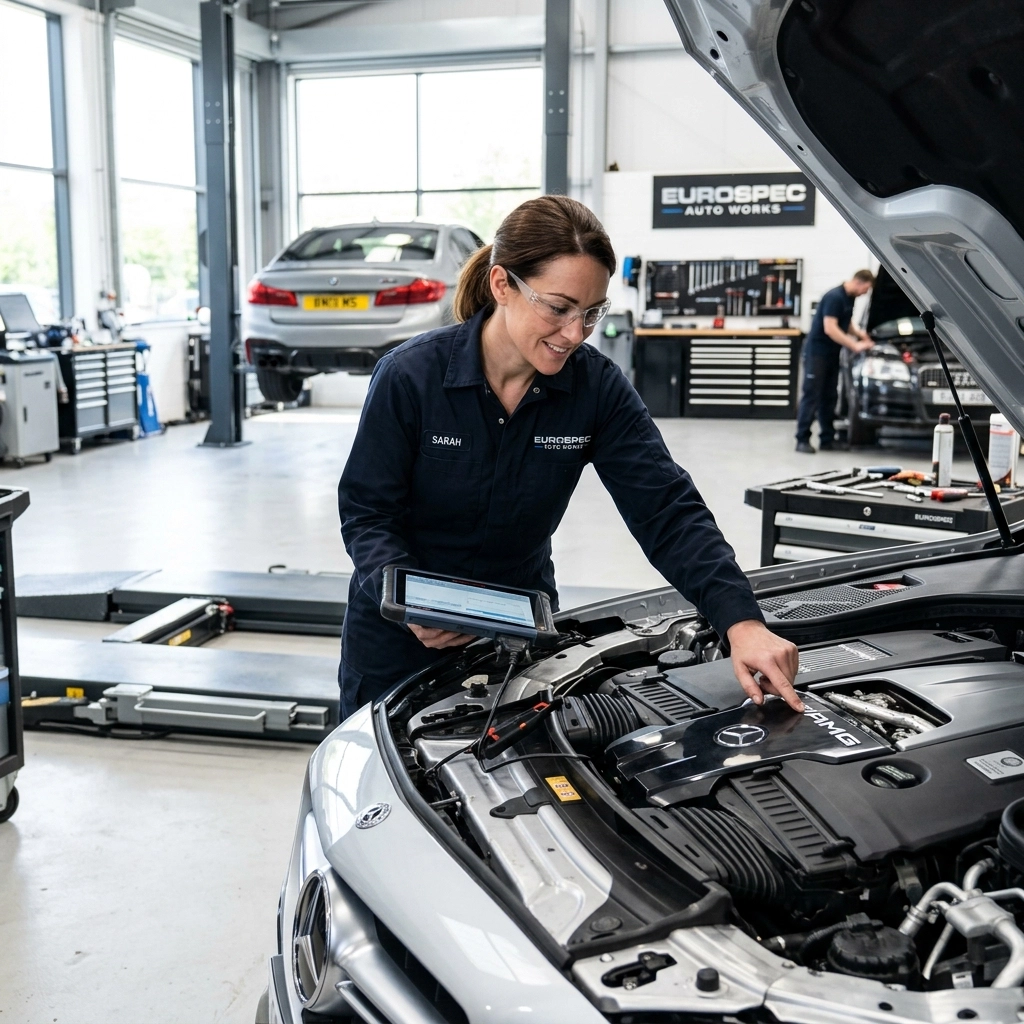
Owning a European vehicle in Lihue is a statement of appreciation for fine engineering, performance, and comfort. Whether you are navigating the winding roads of Kauai in a sleek Mercedes-Benz or hauling the family in a sturdy Volvo, these machines are built to a higher standard. However, that high standard of engineering requires an equally high standard of care. At Destination Autoworks, we have spent over 25 years serving the Kauai community. We’ve seen firsthand how the island’s unique environment: the salt air, the humidity, and the stop-and-go traffic of Lihue: can take a toll on even the most robust German or Swedish engine. Unfortunately, we also see owners making the same preventable mistakes that lead to expensive repairs. If you want to protect your investment and keep your car running like the day you drove it off the lot, here are the seven most common mistakes people make with European auto repair and, more importantly, how to fix them. 1. Following the “Normal” Service Schedule in an Island Environment The owner’s manual in your glovebox likely lists two maintenance schedules: “Normal” and “Severe.” A common mistake is assuming that because you aren’t racing your car on a track, you fall into the “Normal” category. In Lihue, “Normal” driving doesn’t really exist. Between the high humidity, the salt-laden air of Kauai, and the frequent short trips that don’t allow the engine to reach full operating temperature, your vehicle is almost certainly operating under “Severe” conditions. The Fix: Transition your maintenance mindset. Follow the severe service interval for oil changes, filter replacements, and fluid flushes. Why regular maintenance extends the life of your vehicle is especially true for European imports that rely on clean, high-grade lubricants to protect complex internal components. 2. Using Generic Parts and Fluids European engines are designed with incredibly tight tolerances. Brands like BMW, Mercedes, and Audi have very specific requirements for everything from the viscosity of the motor oil to the chemical composition of the coolant. Using a “universal” coolant or the cheapest oil available at a big-box store is a recipe for disaster. Generic fluids can lead to seal degradation, internal corrosion, and even the failure of sensitive components like the water pump or turbocharger. Similarly, low-quality aftermarket brake pads may save you a few dollars today, but they often squeal, produce excessive dust, and wear out your expensive rotors prematurely. The Fix: Always insist on OEM (Original Equipment Manufacturer) or high-quality parts that meet European specifications. At Destination Autoworks, our ASE-certified technicians use only the fluids and parts that your specific manufacturer recommends. This ensures your vehicle performs exactly as it was engineered to. 3. Believing the Myth of “Lifetime” Fluids If your dealership or manual tells you that your transmission fluid or coolant is “lifetime,” take that with a grain of salt. In the world of automotive manufacturing, “lifetime” often refers only to the duration of the original factory warranty: not the 15 or 20 years you hope to keep the car. Over time, transmission fluid breaks down due to heat and friction. In the tropical climate of Kauai, heat is a constant factor. Neglecting these fluids is one of the leading causes of transmission problems. The Fix: Treat “lifetime” fluids as long-life fluids, not permanent ones. We recommend having your transmission, differential, and cooling systems inspected and serviced every 60,000 to 80,000 miles to prevent catastrophic (and expensive) failures. 4. Taking Your Car to a Generalist Mechanic Not all mechanics are created equal. While a general mechanic in Lihue may be excellent at working on domestic trucks or economy sedans, European cars require specialized diagnostic tools and software. Mercedes-Benz, for example, uses complex electrical systems and proprietary computer codes that generic scanners often can’t read accurately. A generalist might misdiagnose a sensor issue, leading to a “parts-darts” approach where they keep replacing components until the problem goes away: on your dime. The Fix: Choose a shop that specializes in European auto repair in Lihue. At Destination Autoworks, we have the specialized diagnostic equipment and the decade-spanning expertise required to pinpoint issues quickly and accurately. Knowing what makes Destination Autoworks different comes down to our commitment to brand-specific knowledge. 5. Neglecting Tire Health and Alignment Kauai’s roads can be tough. Between the occasional pothole and the abrasive nature of island asphalt, your tires and alignment take a beating. European cars are often tuned for precision handling, which means they are highly sensitive to even slight misalignments. If your alignment is off, you’ll experience uneven tire wear, reduced fuel economy, and a “pull” in the steering wheel. Even worse, it can put undue stress on your suspension components. The Fix: Don’t wait until your tires are bald to think about your suspension. Regularly rotating your tires in Lihue and checking your alignment at least once a year will save you hundreds of dollars in the long run. Proper alignment protects your suspension and ensures your European car handles with the agility you expect. 6. Attempting Complex DIY Repairs Without Proper Tools We appreciate the hands-on spirit of many Kauai drivers. However, European cars are increasingly digital. Many modern repairs: even something as seemingly simple as a battery replacement or a brake job: require the car’s computer to be “reset” or “coded” to recognize the new part. Without the proper software, a DIY battery swap could lead to electrical glitches, and a brake job might trigger permanent error lights on your dashboard. Furthermore, European engines often require “specialty tools” for tasks like timing belt replacements or valve adjustments that you simply won’t find in a standard toolbox. The Fix: Know your limits. While checking your oil or changing a wiper blade is great, leave the complex mechanical and electrical work to the professionals. Attempting to save money on labor can often result in a much higher bill to fix the mistakes made during a DIY attempt. 7. Ignoring the Early Warning Signs It’s tempting to ignore a small oil drip on the driveway or
Is Skipping Your Wheel Alignment Bad? Here’s the Truth

Picture this: You’re driving down Kaumualii Highway, enjoying the lush green scenery of Kauai. You take your hand off the steering wheel for just a split second to adjust the radio, and suddenly, your car starts drifting toward the shoulder. You find yourself constantly “fighting” the wheel just to keep the vehicle centered in your lane. Many drivers in Lihue treat wheel alignment as an “optional” service, something to be checked only when they get new tires or if they happen to remember. But is skipping your wheel alignment actually bad for your car? The short answer is yes. In fact, ignoring your alignment is one of the quickest ways to turn a minor maintenance task into a major financial headache. At Destination Autoworks, our ASE-certified technicians see the results of neglected alignments every day. From shredded tires to compromised safety, the “truth” about skipping your alignment is that it costs you far more than the service itself. What Exactly Is a Wheel Alignment? To understand why skipping it is risky, we first need to clear up a common misconception. Wheel alignment isn’t actually an adjustment of the wheels or tires themselves. Instead, it’s an adjustment of the vehicle’s suspension system: the complex network of components that connects the vehicle to its wheels. Think of it like a pair of high-quality running shoes. If your feet are perfectly aligned, the soles wear down evenly, and you can run for miles without pain. But if you overpronate or have a crooked gait, you’ll wear out one side of the shoe within weeks, and eventually, your knees and hips will start to ache. In your vehicle, the “ache” manifests as worn-out suspension parts, and the “soles” are your expensive tires. A professional wheel alignment in Lihue ensures that your tires make contact with the road at the precise angle required by the manufacturer. The Financial Fallout: How Your Tires Suffer The most immediate and visible consequence of skipping your alignment is uneven tire wear. When your wheels aren’t pointed in exactly the right direction, they aren’t rolling smoothly; they are essentially being dragged sideways across the asphalt. 1. Accelerated Tire Wear Research shows that misaligned wheels can cause tires to wear out up to three times faster than normal. If you invested in a high-quality set of tires designed to last 50,000 miles, a bad alignment could see them bald and dangerous by the 15,000-mile mark. Given the cost of rubber these days, skipping a maintenance visit is a poor financial trade-off. You can learn more about maximizing your rubber’s lifespan in our guide on how often should you rotate your tires in Lihue. 2. Specific Wear Patterns Our technicians look for “feathering” (where the tread is smooth on one side and sharp on the other) or “camber wear” (where the inside or outside of the tire is significantly more worn than the rest). Once these patterns develop, the damage is often irreversible, and even correcting the alignment won’t bring that lost tread back. The Fuel Efficiency Myth: Why Your Wallet Feels the Weight With gas prices always a topic of conversation on the island, every mile per gallon counts. Many drivers don’t realize that their mechanic in Lihue can actually help them save money at the pump through a simple alignment check. When your wheels are misaligned, your engine has to work significantly harder to overcome the “rolling resistance” of tires that aren’t heading in the same direction. It’s like trying to push a shopping cart with one wheel stuck sideways: you have to exert much more energy to keep it moving forward. According to industry data, severe misalignment can reduce fuel efficiency by as much as 10%. For a daily commuter in Kauai, that 10% adds up to hundreds of dollars over the course of a year. Keeping your vehicle aligned is a key part of why regular maintenance extends the life of your vehicle and keeps your operating costs low. Safety First: The Danger of a Wandering Vehicle While tires and fuel are about money, alignment is also about safety. A vehicle that pulls to one side is a vehicle that isn’t responding correctly to your input. In an emergency situation: like a sudden stop or a sharp swerve to avoid an obstacle on a narrow Lihue road: proper alignment can be the difference between a close call and a collision. Reduced Grip and Traction When your tires aren’t making full, flat contact with the road, your “contact patch” is reduced. This means you have less grip when cornering and longer stopping distances when braking. In Hawaii’s frequent rain, this loss of traction significantly increases the risk of hydroplaning. Driver Fatigue You might not notice it on a five-minute drive to the store, but on longer trips, the constant micro-adjustments required to keep a pulling vehicle straight lead to significant driver fatigue. A tired driver is a less attentive driver, which compromises the safety of everyone on the road. The “Silent” Damage: Suspension and Steering The wheels are the most visible part of the equation, but the stress of misalignment travels upward into the vehicle’s “bones.” Driving with poor alignment puts constant, uneven pressure on your: Shocks and struts Ball joints Tie rods Wheel bearings Over time, these components begin to rattle, leak, or fail prematurely. Replacing a full set of struts or a steering rack is a massive auto repair in Lihue expense that could often have been avoided with a simple alignment check every 6,000 to 10,000 miles. If you notice strange noises alongside a pulling sensation, you may be seeing the 5 signs your vehicle needs immediate auto repair. 5 Warning Signs You Need an Alignment Now Don’t wait for your next oil change if you notice any of the following symptoms: The Steering Wheel is Off-Center: When driving straight, your steering wheel logo should be level. If it’s tilted to the left or right, your alignment is out. Pulling to One Side: Does the
How Often Should You Rotate Your Tires in Lihue?
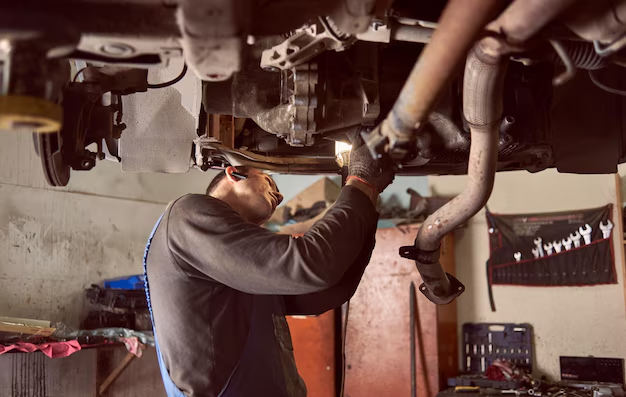
Whether you’re a resident or just visiting the beautiful island of Kauai, taking care of your vehicle’s tires is crucial for safe and efficient driving. The lush landscapes and scenic routes in Lihue, Hawaii, are a pleasure to drive through, but the island’s unique conditions can be tough on your tires. One question that often comes up is how often you should rotate your tires in Lihue. In this guide, we’ll delve into the importance of tire rotation, how local conditions affect wear, and practical tips to ensure your tires serve you well. Understanding Tire Rotation Tire rotation is the process of moving tires from one position on a vehicle to another. This practice helps ensure that tires wear evenly over time, which can prolong their lifespan and maintain optimal performance. Why Rotate Your Tires? Uneven tire wear is a common issue that can lead to premature tire replacement. By rotating your tires, you help distribute the wear more evenly across all four tires. This not only extends the life of your tires but also improves vehicle handling and safety. Uneven tire wear can affect your vehicle’s alignment and fuel efficiency, so regular rotation is essential. Imagine you’re driving along the scenic routes of Lihue and you suddenly feel your steering wheel vibrating. This could be a sign of uneven tire wear or misalignment. Ignoring these signs can lead to costly repairs. Different Rotation Patterns There are several rotation patterns, including front-to-back, cross, and side-to-side patterns. The right pattern depends on your vehicle’s drivetrain—whether it’s front-wheel drive, rear-wheel drive, or all-wheel drive. Consulting with a professional at Destination Autoworks can help determine the best pattern for your vehicle. For example, if you drive a front-wheel-drive car, the front tires typically wear out faster as they handle most of the braking and steering. Rotating them to the back can help balance the wear and extend the life of all four tires. If you’re unsure about which pattern suits your vehicle, checking your owner’s manual or consulting a professional is a wise choice. How Lihue’s Climate Affects Tire Wear Lihue’s tropical climate and road conditions can significantly impact tire wear. Understanding these factors can help you adjust your maintenance schedule accordingly. The Impact of Heat and Humidity The warm and humid climate of Lihue can cause tires to wear more quickly. Heat can increase the tire’s pressure and affect its durability, leading to accelerated wear if not properly managed. Regularly checking tire pressure is crucial in these conditions. In a real-world scenario, if you park your car outside during the hot summer months, the heat can cause the air inside the tires to expand, increasing the pressure. Over-inflated tires can wear unevenly and have a higher risk of a blowout. Road Conditions and Tire Wear Lihue’s roads can vary from smooth pavement to rugged, uneven surfaces. Frequent exposure to rough roads can cause tires to wear unevenly, making regular rotation even more important. The mix of urban and rural roads in Kauai means your tires might experience a variety of stresses. Consider a scenario where you regularly take trips to the more remote parts of Kauai. The unpaved roads can cause additional wear and tear on your tires. By rotating your tires more frequently, you can help ensure they wear evenly and last longer, preventing the need for premature replacement. Recommended Tire Rotation Schedule The frequency of tire rotation can depend on several factors, including vehicle type, tire type, and driving habits. However, general guidelines can help you keep your tires in top condition. General Recommendations For most vehicles, it’s advised to rotate your tires every 5,000 to 7,500 miles. This is a good rule of thumb, but it’s always best to check your vehicle’s manual for specific recommendations. If you frequently drive on rough roads or carry heavy loads, you might need to rotate your tires more often. For instance, if you’re using your truck to haul heavy equipment for a construction project, the added weight puts extra stress on the tires. In such cases, rotating your tires every 3,000 to 5,000 miles might be more appropriate. Signs You Need to Rotate Your Tires Aside from mileage, pay attention to signs that might indicate the need for a rotation. Uneven tread wear, vibrations, and unusual noises can all suggest it’s time for a tire rotation. If you notice these signs, it’s a good idea to visit a professional for an evaluation. Ignoring these signs can lead to more severe issues, such as alignment problems or even the need for suspension repairs, which can cost several hundred dollars. Seasonal Considerations for Tire Rotation While Lihue’s weather is relatively consistent year-round, some seasonal factors can still affect tire performance and rotation needs. Rainy Season Precautions During the rainy season, tire traction becomes even more crucial. Ensuring your tires are evenly worn can help maintain grip on wet roads. Regular rotation during this time can enhance safety and performance. Driving on wet, slippery roads with unevenly worn tires can increase stopping distances and reduce control. By maintaining even tread wear through regular rotations, you can help ensure that your vehicle handles better in wet conditions, reducing the risk of accidents. Vacation and Holiday Driving The holiday season can mean more visitors and heavier traffic on Lihue’s roads. If you’re planning a long drive or hosting visitors, check your tires’ condition and schedule a rotation if necessary. This will ensure safe travel during peak times. Professional Tire Services in Lihue While DIY tire rotation is possible, professional services ensure accuracy and comprehensive care. Here’s why you might consider professional help. Expertise and Equipment Professionals at Destination Autoworks have the expertise and equipment to handle tire rotations efficiently. They can also check for other potential issues, like alignment or suspension problems that
Transmission Problems? Know the Warning Signs Early
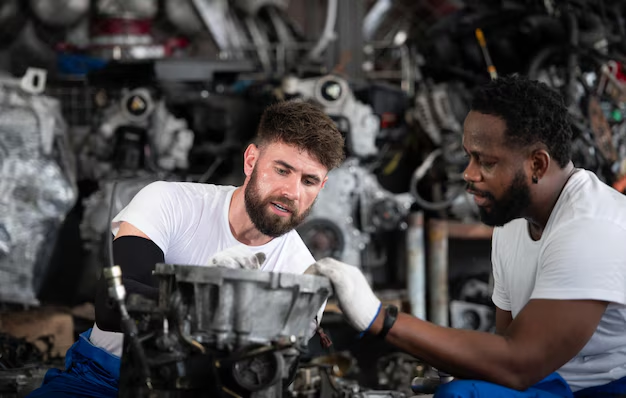
Your vehicle’s transmission is one of the most critical components in ensuring a smooth, safe, and reliable driving experience. Acting as the bridge between your engine and your wheels, the transmission controls power delivery and allows you to shift gears seamlessly. However, like any sophisticated system, it can develop problems over time. Ignoring early warning signs can lead to expensive repairs, reduced vehicle performance, or even complete transmission failure. At Destination Autoworks, we understand the importance of keeping your transmission in top condition. With over 25 years of automotive experience and ASE-certified technicians, we specialize in European, Asian, and domestic vehicles, ensuring expert care for every transmission issue. This guide will help you identify the most common warning signs of transmission problems, so you can take action early and protect your investment. 1. Unusual Noises When Driving One of the earliest indicators of transmission trouble is unusual noises. Buzzing, humming, or whining sounds when your vehicle is in gear often point to worn-out gears or low transmission fluid. You might notice these sounds when shifting, accelerating, or even when the car is idling. Unusual noises should never be ignored. They can indicate internal wear that, if left unchecked, may lead to complete transmission failure. Our team at Destination Autoworks can quickly diagnose these issues, ensuring your transmission receives timely attention and preventing further damage. 2. Slipping Gears Transmission slippage occurs when your car unexpectedly shifts out of gear or struggles to stay in the selected gear. This can cause inconsistent acceleration, difficulty maintaining speed, and dangerous driving conditions. Common causes include worn gears, low transmission fluid, or issues with the clutch in manual transmissions. At Destination Autoworks, we perform comprehensive inspections to identify the root cause of slipping gears. Our preventive maintenance services, including fluid checks and component assessments, help keep your transmission operating smoothly and safely. 3. Delayed Engagement Have you ever noticed a pause or hesitation when shifting from park to drive or reverse? This delayed engagement is often caused by insufficient hydraulic pressure due to low transmission fluid levels or internal component wear. Even a brief delay can indicate underlying issues that, if left unresolved, may result in costly repairs or a total transmission failure. Our ASE-certified technicians are trained to diagnose these subtle signs, offering precise solutions to restore reliable performance. 4. Transmission Fluid Leaks Transmission fluid plays a crucial role in lubricating and cooling your transmission. A leak, often visible as a red or brown fluid under your vehicle, can lead to overheating, increased friction, and long-term damage. Destination Autoworks specializes in fluid inspections and replacements to prevent leaks and maintain optimal transmission function. We also provide guidance on how to monitor your fluid levels at home, helping you catch potential issues before they escalate. 5. Dashboard Warning Lights Modern vehicles are equipped with sophisticated sensors that monitor the transmission’s performance. If your dashboard lights up with a transmission warning, it’s a signal that something is amiss. While it may be tempting to ignore this alert, doing so can cause more severe problems. Our team at Destination Autoworks uses advanced diagnostic tools to pinpoint the exact issue, whether it’s a sensor fault, fluid problem, or internal wear. Timely professional intervention can prevent unnecessary repairs and keep your car running reliably. 6. Burning Smell A burning odor from your vehicle, especially when linked to transmission fluid, is a serious red flag. Overheating fluid can result from low fluid levels, worn components, or excessive friction. Ignoring this warning can cause permanent damage to your transmission and compromise your vehicle’s safety. Destination Autoworks provides thorough inspections and A/C and cooling system services, ensuring your car stays comfortable and safe in all conditions. 7. Poor Acceleration or Performance If your car struggles to accelerate, particularly when climbing hills or carrying heavy loads, it may indicate a transmission problem. Worn gears, slipping clutches, or fluid issues can prevent your transmission from efficiently transferring engine power to the wheels. Our performance-focused services include full transmission assessments and upgrades for vehicles requiring enhanced handling and power delivery. With Destination Autoworks, you can trust that your car will perform at its best, whether for daily commuting or high-demand driving. Preventive Care: The Key to Longevity Regular maintenance is essential to prolonging the life of your transmission and preventing costly repairs. Key preventive measures include: Checking and replacing transmission fluid as recommended by the manufacturer Inspecting transmission components for wear and damage Performing scheduled maintenance and diagnostic testing Ensuring cooling systems are functioning properly to prevent overheating At Destination Autoworks, we offer comprehensive maintenance services, from routine fluid checks to complete transmission repairs. Our expertise spans European, domestic, and specialty vehicles, giving you peace of mind knowing your car is in capable hands. Why Choose Destination Autoworks? Expert Care and Integrity: Our ASE-certified technicians are dedicated to delivering high-quality service while keeping honesty and transparency at the core of every repair. Specialized Experience: We handle European and domestic vehicles, including unique models that other shops often avoid, such as Japanese Kei trucks and specialty imports. Safety and Reliability: State safety inspections and thorough transmission diagnostics ensure your vehicle is safe and fully operational. Over 25 Years of Expertise: With decades of experience, our team has built a reputation for precision, reliability, and unmatched customer care. Early detection of transmission issues can save you money, prevent breakdowns, and keep your vehicle running safely for years. If you notice any of these warning signs or want a professional transmission check-up, contact Destination Autoworks today. Our certified experts provide reliable diagnostics, maintenance, and repairs tailored to your vehicle, ensuring peace of mind on every drive.